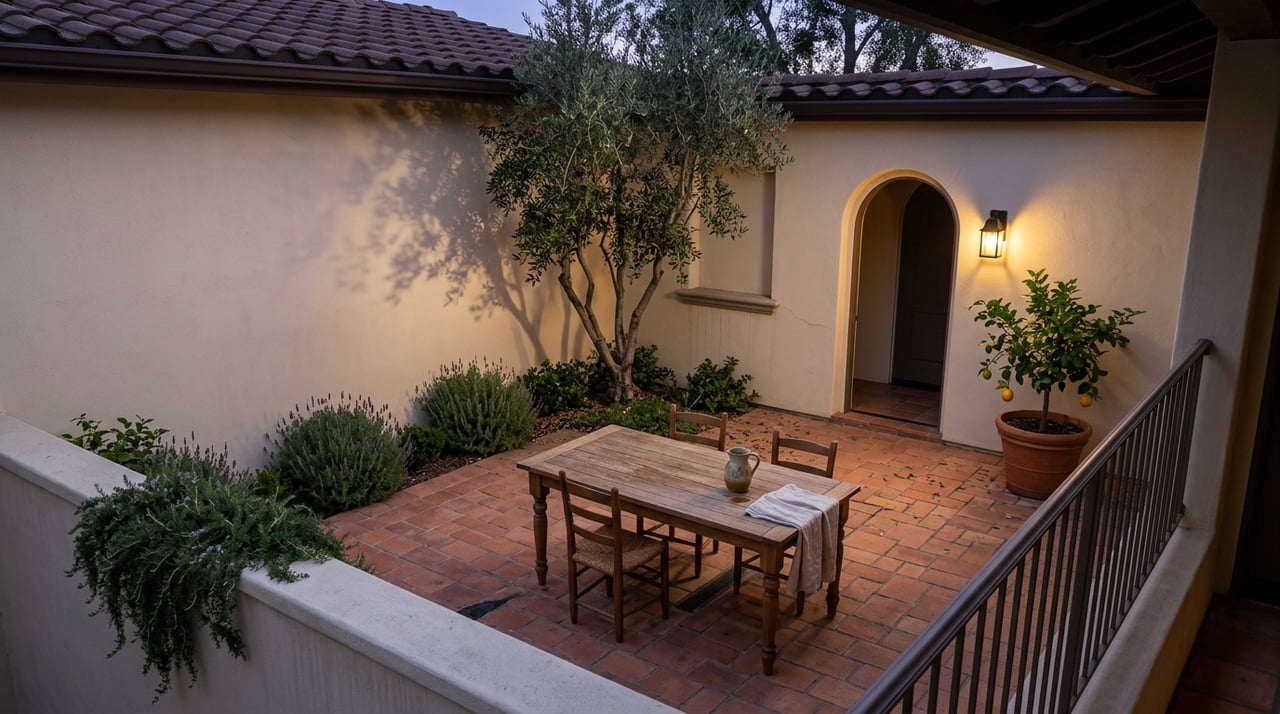
Escrow is three weeks out. The buyer's title company asks for one document: the current annual self-certification and maintenance plan tied to the property's Mills Act contract. The seller, who inherited the house from a parent and has lived there for eleven years, has never heard the phrase. No one filed anything. There may or may not have been a repaint job done by a contractor five years ago without a Certificate of Appropriateness.
This is the moment that catches Pasadena sellers off guard, and it has nothing to do with whether the contract transfers. It always transfers. What doesn't transfer automatically is proof that the seller held up their end of it.
The Clause That Runs With the Land, Not With the Owner
A Mills Act contract in Pasadena is a deal between a homeowner and the city: in exchange for maintaining a designated historic property to the Secretary of the Interior's Standards, the owner may see a reduction in property taxes, calculated by the Los Angeles County Assessor using an income approach rather than a straight market valuation. The contract is recorded on title. When the home sells, it transfers to the new owner with the property, not to the person who signed it.
That part is well understood. What gets skipped over in most conversations about Mills Act homes is what the city expects along the way: annual self-certification, periodic inspections, and a Certificate of Appropriateness before any exterior work that touches a historic feature. The city has said plainly that recordation does not guarantee savings and that assessed value is reviewed every year. A sale doesn't reset any of that. It just hands it to someone new.
If the city later finds the contract in breach, whether from unpermitted exterior work, a lapsed maintenance plan, or deferred repairs that were never addressed, the consequence isn't a warning letter. The contract can be canceled, and the owner of record at that time owes a penalty equal to 12.5 percent of the property's current assessed value. On a home assessed anywhere near Pasadena's $2 million single-family cap for the program, that is a quarter million dollars, payable by whoever holds the deed when the cancellation happens. If that's the buyer, six months after closing, because a prior owner's unpermitted window replacement finally surfaces during a routine inspection, it becomes the seller's disclosure problem retroactively, and the buyer's legal one.
A canceled Mills Act contract doesn't just raise the tax bill back to market rate. It triggers a penalty equal to 12.5 percent of the home's current assessed value, owed by the owner holding title at the time of cancellation.
This is the actual friction point in a Mills Act sale. Not the transfer. The verification.
Why Only a Few Hundred Pasadena Homes Have This at All
The reason a clean Mills Act contract is worth protecting so carefully is that the city doesn't hand them out freely. As of the most recent published count, Pasadena had roughly 380 homes under active Mills Act contracts, a small fraction of the city's housing stock even counting only its designated landmarks and historic district properties. New contracts go through a competitive annual cycle: applications open early in the year, and for the 2026 cycle the deadline to apply was May 29. That window has already closed for this year. Anyone who wants to attach a Mills Act contract to a Pasadena property they're buying today will be waiting for the next cycle to open, most likely again in early 2027 based on the program's recurring pattern.
In recent cycles the city has also capped how many new contracts it approves each year, with priority given to properties that show real threat of deterioration, contribute to affordable housing goals, or meet other stated preservation priorities. Eligibility itself is narrower than people assume. Single-family homes generally need an assessed value at or below $2 million to qualify, with named exceptions for Greene and Greene works, designated historic monuments, and properties individually listed on the National Register.
Put together, this means an existing, well-documented Mills Act contract on a home for sale right now is not a paperwork formality. It's a structural advantage that a comparable historic home without one cannot simply go acquire this year. That scarcity is the actual selling point, more than the phrase "tax savings" on its own.
The Owner Who Doesn't Need It, and the Buyer Who Does
Here is the detail that changes how a heritage-minded seller should think about their own situation. The city has been direct about this: if you've owned your Pasadena home for decades and already benefit from a low Proposition 13 base-year assessment, adding a Mills Act contract might not save you anything. In some cases the income-based Mills Act valuation comes out higher than what a long-time owner is already paying. Historically, owners who did see savings averaged around a 51 percent reduction, but the city is equally clear that results vary property to property, and a long hold with a low existing basis is exactly the scenario where the math can fail to help the current owner at all.
That fact usually gets read as a reason to skip the Mills Act conversation entirely if you're a long-time owner preparing to sell. It's actually the opposite. The moment your home transfers, the buyer's tax basis resets to the sale price, whatever that turns out to be. A Mills Act contract attached before you sell doesn't do much for your own bill, but it can meaningfully lower what the next owner pays for years afterward, because their new market-rate basis is precisely where the Mills Act's income-based calculation starts to produce real savings.
The clearest illustration of this sits inside Pasadena's own preservation record. 1330 Hillcrest Avenue, known architecturally as the James Allen Freeman House, an English Craftsman design by Arthur and Alfred Heineman completed in 1913, sold in December 2020 for $8.6 million with an active Mills Act contract in place. The buyer's property taxes on that sale were held under $20,000 a year, a figure that would be dramatically higher without the contract attached. Pasadena Heritage has featured the same house on its Hillcrest neighborhood walking tour, alongside the Robert R. Blacker House and the Cordelia A. Culbertson House, both Greene and Greene commissions in the same Oak Knoll subdivision conceived in 1905. The architecture draws the buyer. The Mills Act contract is what makes owning it financially livable.
If you're a long-time owner with a low Prop 13 basis and no strong reason to add a Mills Act contract for yourself, that's still worth a conversation before you list, not because it changes your bill, but because it can change what your home is worth to the specific buyer pool most drawn to it.
What to Verify Before You List or Write an Offer
A few things are worth confirming early rather than in the final weeks of escrow:
- Whether the home is formally designated, individually or as a contributing resource in a historic district, using Pasadena's own Historical Resources Inventory Database
- Whether an existing Mills Act contract is in good standing, including the current maintenance plan, self-certification history, and any required inspections
- Whether any past exterior work, additions, or repaint jobs affecting historic features received a Certificate of Appropriateness, since unpermitted exterior changes are a material fact buyers and their agents will ask about directly
- Whether the property's assessed value falls within the city's eligibility range if a new contract is being considered rather than an existing one being transferred
For sellers who want a second set of eyes on any of this, Pasadena Heritage, the second largest historic preservation nonprofit in California with more than 2,000 members, hosts its Regional Restoration Expo on the grounds of the historic Blinn House, bringing together restoration contractors, architects, and preservation specialists who work specifically with homes like these. It's a useful place to line up documentation help or a qualified contractor before a listing goes live, not after a buyer's inspector flags something.
A Few Direct Questions
Does selling a Mills Act home trigger reassessment to full market value? No. The sale itself does not automatically reassess the property. The contract and its existing tax treatment continue under its terms unless it's later canceled or not renewed by a future owner.
What if the home is historic but was never formally designated? The Mills Act only applies to properties that are designated landmarks, historic monuments, or contributing resources in a recognized district. An undesignated older home can sometimes pursue designation and a Mills Act application in the same cycle, but that path runs on the same annual deadline as new applications, meaning it isn't something you can complete quickly mid-transaction.
Can a buyer add a Mills Act contract right after closing this year? Not immediately. The 2026 application window closed on May 29. A buyer closing on an eligible, undesignated historic property now would need to wait for the next annual cycle to apply.
Historic homes in Pasadena carry a kind of value that doesn't show up cleanly in a comparable sales report. The Mills Act is part of how that value gets protected, and part of how it gets lost, depending on whether the paperwork behind it was actually kept up. If you're weighing a sale or a purchase involving one of these contracts and want a clear read on where a specific property stands, Nichole Dunville works through exactly this kind of detail with Pasadena's heritage home sellers and buyers every day. Let's Connect.